
Gonorrhea Testing and Treatment in Houston
Private Testing With Same Visit Antibiotic Treatment
Gonorrhea may cause no symptoms. Rapid STD Houston provides physician-directed NAAT testing, with results typically available in approximately 30 minutes and treatment available on-site when appropriate.

The Short Version
Gonorrhea Testing at a Glance
Everything most people want to know before booking, in one place.
Sample
Urine, or a swab of the throat, vagina or rectum.
Test Type
Nucleic acid amplification test, the most accurate method available.
Testing Timing
Your doctor can guide the best time to test after exposure.
Turnaround
24 to 48 hours to your secure portal.
If Positive
Curable with a single antibiotic injection given here.
Understanding the Infection
What Gonorrhea STD Is and How It Spreads
Gonorrhea is caused by the bacterium Neisseria gonorrhoeae. It passes through vaginal, anal and oral sex, and ejaculation is not required for transmission. It can also pass to a baby during delivery, where it can cause a serious eye infection.
Gonorrhea behaves differently in different bodies. Most men with a urethral infection notice something within a week, usually discharge or a burn when urinating sharp enough to get their attention. Women are far more likely to feel nothing, or to mistake mild symptoms for a bladder infection or a normal change in discharge.
Throat and rectal infections are the quiet ones in both sexes. They rarely produce symptoms of any kind, they are more common than most people assume, and they are invisible to a urine test. That combination is how gonorrhea keeps circulating through a community that believes it has been screened.
Symptoms Women May Notice
Symptoms Men May Notice
A mild symptom is still a symptom
Gonorrhea testing frequently gets mistaken for a urinary tract infection, especially in women. If you were treated for a UTI recently and it did not fully resolve, that is a reason to test rather than to wait it out.
Screening Guidance
Who Should Get a Gonorrhea Testing
Routine screening is recommended for sexually active women under 25 and older women with increased risk factors. Screening for men and throat or rectal sites depends on sexual practices and individual risk.
During pregnancy, screening is recommended for patients under 25 and older patients with increased risk factors. A licensed physician can recommend the right testing schedule for you.
Gonorrhea can affect the throat, rectum, or urogenital area. Your physician will select testing sites based on your symptoms and exposure history.
Your Visit
How Gonorrhea Testing Works Here
Four steps, most of them faster than the drive over.
Check In
Book online or walk in. Registration takes a few minutes at the desk and nothing about why you are here is discussed in front of other patients.
Brief Licensed Physician Visit
A private consultation helps your licensed physician choose the appropriate testing sites based on your exposure, timing, and symptoms.
Give the Sample
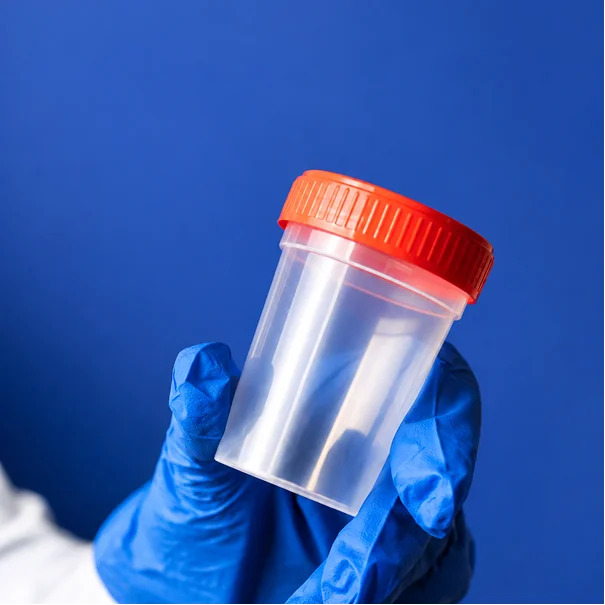
Urine in a cup, or a quick swab of the throat, vagina or rectum. Hold off on urinating for an hour beforehand so the sample is not diluted.
Results and Next Steps
Your result posts to a secure portal in 24 to 48 hours. A positive comes with a Licensed Physician phone call and treatment arranged the same day.
Reading Your Result
What Your Result Actually Means
Negative
No gonorrhea bacteria were found at the sites tested. If you tested within a few days of exposure it may simply have been too early, and a repeat test is worth booking. Remember that a negative urine result says nothing about the throat or rectum unless those sites were swabbed.
Positive
Gonorrhea was detected. It is curable, and treatment is a single injection rather than a week of pills. A Licensed Physician calls you the same day and arranges the injection, along with guidance on recent partners. Avoid sex for seven days after treatment.
Retest in Three Months
Anyone treated for gonorrhea should test again around three months later. Reinfection from an untreated partner is the usual reason gonorrhea comes back, not treatment failure, and three months is when it tends to resurface.

If You Test Positive
Gonorrhea Treatment On Site
If Positive, Gonorrhea is curable. Ceftriaxone is the CDC-recommended first-line treatment for uncomplicated gonorrhea in most adults. Your physician will select the appropriate treatment based on the infection site, medical history, allergies and other clinical factors.
We also handle partner notification. Where Texas law allows it, expedited partner therapy lets your partner be treated without waiting weeks for an appointment of their own. Untreated partners are the single most common reason a cured infection comes straight back.
Throat infections are harder to clear than genital ones, so if you want clinical specificity, CDC recommends a test of cure 7–14 days after treatment for pharyngeal gonorrhea while routine test of cure is unnecessary for appropriately treated uncomplicated urogenital or rectal infection.
IF Left Untreated
Why an Untreated Infection Is Worth Taking Seriously
Gonorrhea does not stay where it started. Given enough time it moves upward through the reproductive tract, and in a small number of cases it enters the bloodstream entirely. None of this requires you to have felt unwell along the way.
In Women
The bacteria can ascend to the uterus and fallopian tubes and cause pelvic inflammatory disease, which scars tissue permanently. The results are chronic pelvic pain, ectopic pregnancy and infertility, and the damage is not reversible once done.
In Men
Infection can spread to the epididymis, causing pain, swelling and fever severe enough to need urgent care. It is uncommon for this to affect fertility, but it is a genuinely painful condition that a single injection would have prevented.
Throughout the Body
In rare cases gonorrhea enters the bloodstream and becomes a disseminated infection, producing joint pain, swelling and skin lesions. This is uncommon but it is a medical emergency when it happens.
In Pregnancy
Gonorrhea raises the risk of miscarriage and preterm delivery, and it can pass to the baby during birth. Untreated, that infection can damage a newborn’s eyes, which is why prenatal screening and newborn eye treatment are both standard practice.
Questions
Gonorrhea Testing Questions
Get a Gonorrhea Testing Service in Houston Today
Book online in under a minute or walk in during opening hours. One sample, results in 24 to 48 hours, and a single injection that clears it if you need one. We serve patients from across the Houston metro, with evening and weekend availability for people who cannot take time off work.